STEM Education —The Foundation of Innovation,Entrepreneurship & National Development
The future prosperity of every nation depends on its ability to create new knowledge, innovative technologies, and globally competitive enterprises.
STEM
Innovation
Technology
Industries
Employment
National Development
Nations that lead in research shape the future of the world. STEM is the engine that converts curiosity into innovation, and innovation into industries, employment and prosperity.
Nearly every sector — from everyday household products to complex industrial systems — depends on continuous breakthroughs in Science and Technology. Investment in STEM is investment in a nation's capacity to solve its own problems.
The purpose is not to memorise formulae, but to build thinkers who can question, investigate, analyse and apply. STEM education must produce problem solvers, not merely degree holders.
Physics, Chemistry, Biology and Mathematics — at the centre of learning.
Almost every major advancement in technology, medicine, engineering, agriculture, energy, communication and industry originates from research in Physics, Chemistry, Biology or Mathematics. These subjects explain the natural world, provide the foundations of scientific discovery and make technological development possible.
Together, these subjects influence national development, economic growth and the quality of human life. Strong fundamental sciences build strong technologies, strong economies and a stronger future.

Enables developments in energy, electronics, communication, transport, space science and computing.

Supports medicines, materials, manufacturing, agriculture, energy storage and environmental solutions.

Drives healthcare, biotechnology, genetics, food security and life sciences.

The language of science — foundation of engineering, economics, computing, AI and data analysis.
Science needs more than a few periods a week.
Despite their importance, science subjects are often introduced in the earlier grades as a single combined subject with limited teaching time. Physics, Chemistry and Biology may share only a few periods — leaving insufficient time for experiments, investigation, discussion and meaningful problem-solving.
When science is taught mainly through textbooks and brief explanations, students may remember information but often do not develop the concepts required for advanced study and practical application.
Quality STEM education needs time for students to observe, experiment, measure, analyse, question and solve problems.
Schools must therefore give greater academic time and importance to fundamental sciences and mathematics.
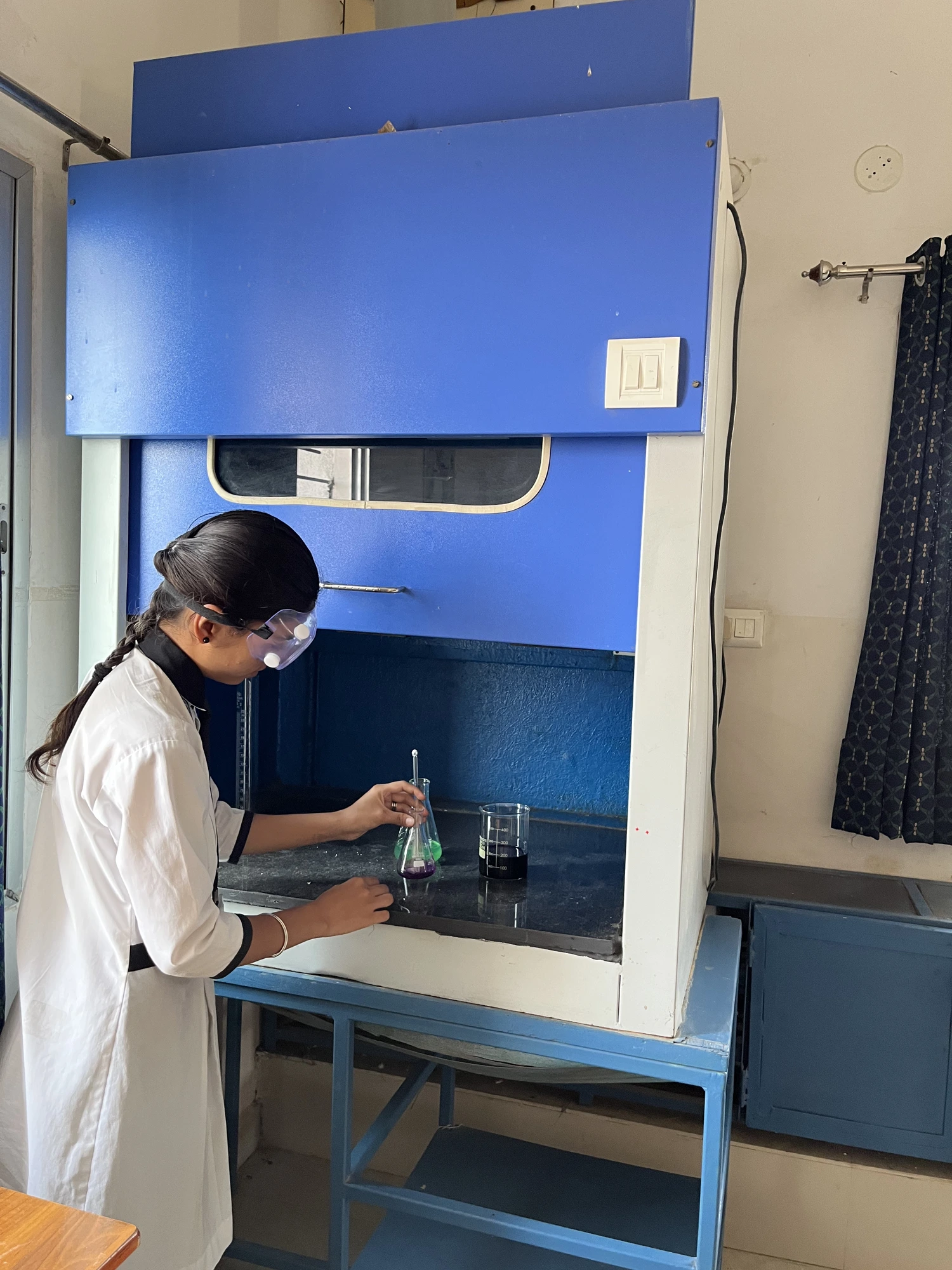
STEM learning begins early and becomes progressively deeper.
Primary students spend substantial time developing scientific curiosity, mathematical thinking, observation and experimentation. From Grade 6 onwards, Physics, Chemistry, Biology and Mathematics are treated as separate, full-valued subjects — each with dedicated time, specialist teaching, appropriate apparatus, laboratory experience and structured problem-solving.
- Develop each concept systematically
- Perform experiments instead of merely reading about them
- Use scientific instruments and digital sensors
- Observe, measure and analyse real phenomena
- Connect mathematics with scientific applications
- Solve curriculum-based, advanced and real-life problems
- Build readiness for research, innovation and competitive examinations
PBL-TDLE: A research-based learning framework for STEM subjects.
At THECREATOR Education, STEM is not taught as a collection of facts — it is practised as a discipline. The research-based PBL-TDLE framework governs how every STEM concept is learned: teachers introduce it through live demonstrations, students develop it through experiments, investigation and verification in the Concept Lab, and finally apply it to real problems — the same cycle a working scientist follows.
Concepts become clearer, deeper and longer-lasting because students have personally investigated the evidence behind them.
Preparing students for advanced STEM pathways.
Providing greater time for Physics, Chemistry, Biology and Mathematics from an early stage prepares students for advanced studies in engineering, medicine, pure sciences, biotechnology, mathematics, computing, research and emerging technologies.
It also builds the foundation for JEE, NEET, Cambridge, AP, AMC, BPhO and international Science Olympiads — so students develop problem-solving continuously within the school system, without depending entirely on external coaching later.
Strong schools build strong nations.
A country cannot become scientifically and technologically strong without strong foundations in its schools. World-class laboratories, industries and research institutions require students who understand fundamental sciences and can use that knowledge to investigate problems and create solutions.
THECREATOR Education therefore places Physics, Chemistry, Biology and Mathematics at the heart of the curriculum — with more time, better apparatus, hands-on experiments and progressive problem-solving.
Strong fundamental sciences build strong technologies, strong economies and a stronger future.
Logical reasoning
Critical thinking
Creativity
Data interpretation
Experimentation
Decision-making
Collaboration
Scientific inquiry
 Clean Energy
 Biotechnology
 Artificial Intelligence
 Advanced Manufacturing
Peer-reviewed evidence: PBL is the right pedagogy for STEM school reform.
Project/Problem-Based Learning (PBL) can provide an effective model for STEM school reform when implemented with fidelity.
The U.S. National Academies' Rising Above the Gathering Storm (2007) urged states to develop statewide specialty STEM high schools to widen the STEM pipeline — with PBL as the recommended instructional core.
The Texas T-STEM Academy initiative (2010) adopted problem- and project-based learning as its primary instructional strategy — evidence that PBL scales as a system-wide STEM pedagogy, not just a classroom activity.
PBL is well suited as the primary pedagogy for STEM learning: students investigate real problems, apply concepts across disciplines, and build the analytical habits that college and industry demand.
When implemented with high fidelity, PBL improves outcomes even in low-performing school districts — making it a research-backed lever for school improvement.
Engage to Learn & Learn to Innovate