Where Future Innovators Are Nurtured
If Innovation is the Goal, Problem Solving Must Be the Curriculum
THECREATOR Education : The Vision & Philosophy
Science and Mathematics are not subjects of memorization. They are disciplines through which humanity creates solutions to problems and develops technologies, discoveries, inventions, patents, research papers, and Nobel Prize-winning innovations that improve human life and society. The real purpose of learning Physics, Chemistry, Biology, and Mathematics is not merely to pass examinations, but to develop the ability to think, investigate, innovate, and solve real-world problems.
Today’s global economies are driven by research, innovation, and patented technologies emerging from advanced scientific laboratories and leading universities.


From everyday household products to highly complex industrial systems, nearly every sector depends on continuous breakthroughs in Science and Technology. Nations that lead in research shape the future of the world, and this leadership begins with how students are educated at the school level. Schools must therefore evolve into centers of problem-solving and scientific thinking, where students are trained from the early years to question, investigate, analyze, and apply knowledge.
True problem-solving ability is built on deep concept mastery, which cannot be achieved through traditional chalk-and-talk content delivery alone. Concepts must be experienced, investigated, tested, and understood through active engagement.
THECREATOR Education: Learning Redefined
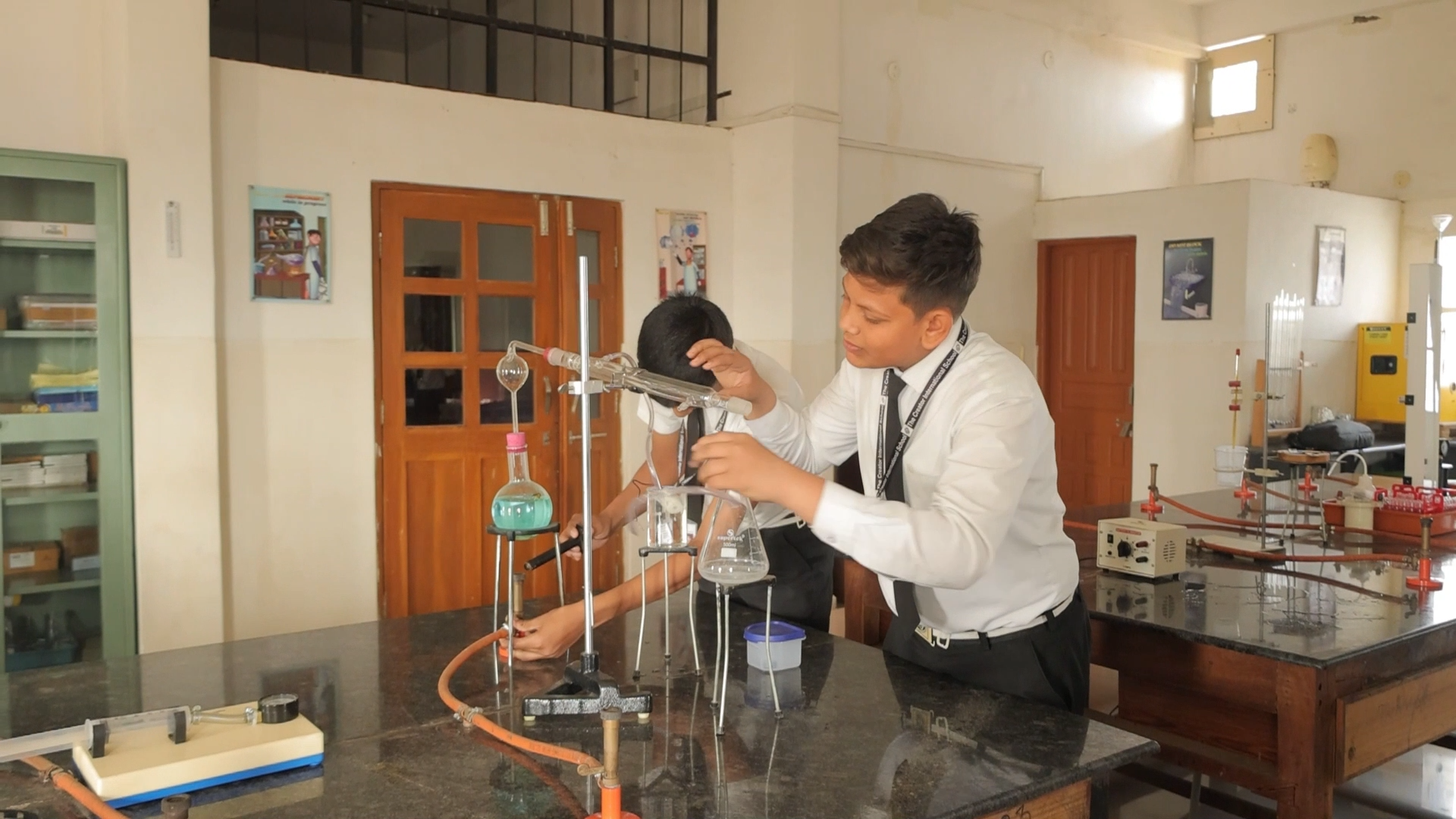
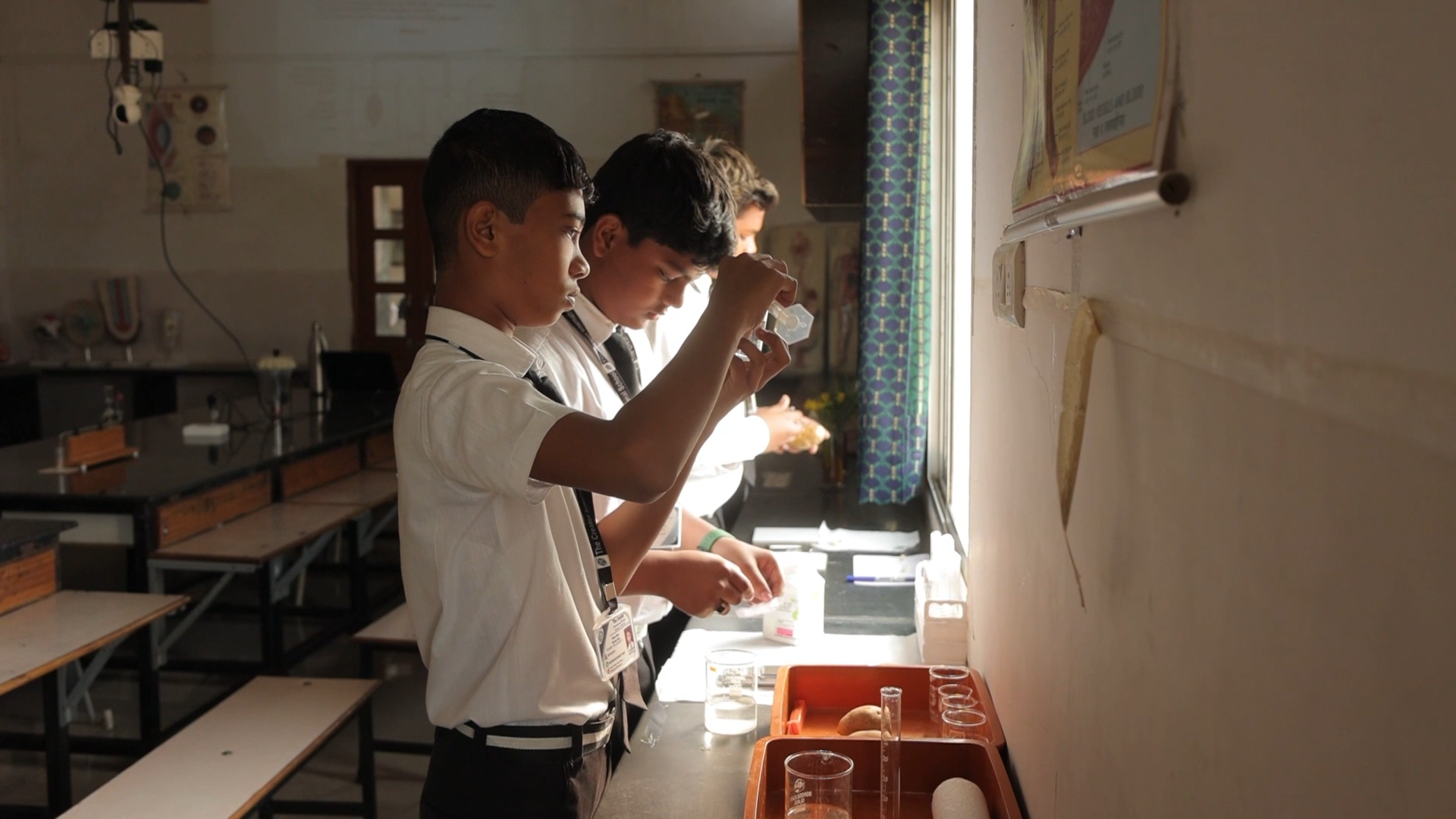
At THECREATOR Education, we go beyond traditional chalk-and-talk teaching by transforming K–12 classrooms into advanced scientific concept labs. Here, students investigate and verify every concept in Physical Sciences and Mathematics through daily experiments, and are systematically trained to apply these concepts in advanced problem solving, helping them grow into future innovators, scientists, and problem solvers.
Implemented @ The Creator International School
leading to following outcome :
100 %


100% Cambridge AS & A ResultS.
100% Admissions in top universities of UK & US
100 %
100% leaners received Global Medals in British Physics Olympiad BPhO (Senior)
100% Scholarships & FA for three undergrad program received by our students
100 %
100% Verified Learning for every learner
100% Engagement of leaner through PBL-TDLE
100% Learning throung experiments


THECREATOR PBL-TDLE Framework
PBL-TDLE (Problem-Based Learning through Teaching by Demonstrations and Learning by Experiments) is a comprehensive educational ecosystem designed to develop concept mastery, critical thinking, and problem-solving skills. It integrates three core components: Concept Labs, CoPE-App, and IDEA Pedagogy to transform traditional teaching into a system of learning through investigation, experimentation, and application.
In PBL-TDLE, classrooms are transformed into Concept Labs equipped with several hundred globally standardized scientific apparatus and several thousand carefully designed experiments to enable students to investigate, verify, and master each and every concepts in Physics, Chemistry, Biology, and Mathematics.
.


The CoPE-App, a cloud-based academic engine supported by a powerful data centre, provides concepts, experiments, apparatus, problems, and detailed solutions for every topic and subtopic, enabling continuous development, assessment, and monitoring of concept mastery and its applications.
The IDEA Pedagogy provides a structured framework for problem solving through four stages: Identification of the problem, Development of concepts through demonstrations and experiments, Execution of the solution, and Assessment through analysis and reflection. This systematic approach develops critical thinking, scientific reasoning, research aptitude, and an innovation mindset, preparing students for higher education, research, and future careers
PBL-TDLE is based on the fundamental principle that every student who actively engages in learning can develop concepts and become a successful problem solver, irrespective of their inherent talent or starting ability.


World-Class Experimental Infrastructure
Every Classroom Becomes a Research Environment
Traditional classrooms are transformed into Concept Labs where scientific concepts are continuously investigated, demonstrated, verified, and applied.
Transformation of Classrooms into Concept Laboratories
Global Standard Concept Laboratories
The model incorporates several hundred global-standard scientific apparatus and several thousand experiments designed by research scientists from leading research institutions.
Key Features and Strengths of the PBL-TDLE Educational Model
Every Student, Every Concept Developed Through Investigation, Verification, Application, and Problem Solving
Cloud-Based Data-Driven Learning Ecosystem
A Complete Digital Academic Infrastructure
The CoPE-App provides a cloud-based educational ecosystem delivering learning analytics, concept mapping, assessment systems, performance tracking, teacher guidance, student monitoring, parent reporting, and institutional quality assurance.


Problem-Solving Through Problems, Not Through Content Delivery
Identify → Develop → Execute → Assess
PBL-TDLE introduces the IDEA framework:
I: Identify the problem
D: Develop concepts through demonstrations and experiments
E: Execute the solution
A: Assess and improve the solution
This pedagogy ensures continuous student engagement throughout the learning process.
IDEA Pedagogy: A New Framework for Problem Solving
Learning Concepts Through Solving Problems
Students do not learn concepts through lectures and then solve problems. Instead, they learn concepts while solving carefully designed problems, making problem-solving the central objective of education.
Training in Conceptual Analysis and Real-Life Problem Solving
Developing Problem Solvers Rather Than Content Learners
Students are systematically trained to understand, analyze, apply, and integrate multiple concepts while solving real-life and complex scientific problems.


Learning Can Be Measured Daily for Every Student and Every Concept
Daily Measurement and Recognition of Learning
Learning outcomes for each subtopic, concept, experiment, and problem can be measured daily in the classroom. Student performance is recorded and rewarded through daily grade sheets shared with students and parents.
100% Assured and Verified Learning
Learning Is Verified, Not Assumed
In the PBL-TDLE model, learning is not assumed after teaching. Students first investigate and verify concepts through experiments and then immediately apply multiple concepts to solve problems in the classroom itself. Teachers verify both concept mastery and concept application directly, making learning 100% assured, measurable, and verified.
Concept Mastery Through Investigation and Problem Solving
No Dependency on External Coaching
Students develop, verify, apply, and master concepts within the classroom itself through demonstrations, experiments, and problem-solving activities.


Students Discover What They Need to Learn
Tailor-made Lesson Planning
The system generates customized lesson plans containing concepts, demonstrations, experiments, problems, and assessments based on the conceptual profile of each class and student cohort.
Teaching Designed Around Student Needs
Student-Led Identification of Required Concepts
Students first analyze problems and identify the concepts required for their solution. Teachers then guide demonstrations and experiments based on the concepts identified by students themselves.
AI-Based Conceptual Diagnosis and Mapping
Every Student's Conceptual Understanding is Known
Using advanced AI tools and KWL analysis, a complete conceptual map is generated for every student. Teachers know precisely which concepts each student has mastered, which concepts are missing, and where misconceptions exist.
Complete Student-Centric and Student-Led Learning
Students Become the Drivers of Their Own Learning
Students themselves analyze problems, identify required concepts, develop conceptual understanding, execute solutions, and assess and correct their own work, making learning completely student-centered.


Elimination of Traditional Chalk-and-Talk Content Delivery
Replacing Passive Learning with Active Learning
The PBL-TDLE model completely eliminates passive textbook content delivery through lectures and replaces it with experiential, investigative, and problem-based learning.
Teacher-Independent and System-Driven Learning
From Teacher Dependency to System Dependency
PBL-TDLE transforms education from a teacher-dependent model into a system-driven learning framework. Educational quality becomes independent of a teacher's expertise, experience, teaching style, mood, or performance..


Learning Through Investigation and Verification
Seeing Before Believing
Teaching occurs through carefully designed scientific demonstrations that allow students to observe concepts, principles, and laws operating in real time.
Teaching Through Scientific Demonstrations
Students Learn by Doing Science
Students first observe demonstrations and then reproduce the entire process through experiments, allowing them to investigate and verify concepts independently.
100% Student Engagement and Active Participation
No Passive Learning
Students remain actively engaged throughout the classroom session through observation, experimentation, measurement, analysis, problem solving, discussion, presentation, and peer review.
Continuous Cognitive Engagement
Students Think Every Minute
Students continuously engage in investigations, measurements, calculations, data analysis, data interpretation, problem solving, presentation, reflection, and correction.


Daily Real-Time Assessment and Analytics
Assessment as a Tool for Learning
Students receive immediate feedback on their mistakes and are encouraged to correct them instantly, reinforcing learning and concept mastery.
Continuous Formative Assessment for Learning
Every Student, Every Problem, Every Day
The system generates daily grade sheets, problem-wise analytics, concept-wise performance reports, experimental performance records, and student-wise learning progress reports.
THECREATOR PBL-TDLE Model
Problem-Based Learning (PBL) through Teaching by Demonstrations and Learning by Experiments (TDLE) is an advanced K–12 learning framework for STEM subjects. Several thousand experiments have been designed by a research scientist using several hundred global-standard scientific apparatus to develop concepts through investigation and experimental verification. More than 10,000 real-life, open-ended problems are then used to train students in advanced problem solving through the application of concepts.


THECREATOR NextGen Training Program (NTP)
We provide expert guidance and structured support for admissions to top National & International universities including UK and USA. From profile building and exam preparations (like AP, NEET, JEE, BPhO, AMC, IPhO, IChO, IBo, IMO, SAT) to application strategy, we help students maximize their chances of securing admissions with up to 100% scholarships. Our approach is focused on achieving global academic excellence.


Engage to Learn & Learn to Innovate
Join THECREATOR Education
Stay updated with our latest learning breakthroughs